BRAINBRUSH
Towards the development of new, non-invasive diagnostic tools for neurodegenerative pathologies
Internal reference number: 21/26-114
Start date: October 1st, 2021
End date: September 30, 2026
Partners
PI (spokesperson) Pr Anabelle Decottignies, Université catholique de Louvain (UCLouvain), de Duve Institute (DDUV)
Co-I 1 Pr Pascal Kienlen-Campard, Université catholique de Louvain (UCLouvain), Institute of Neurosciences (IoNS)
Co-I 2 Pr Bernard Hanseeuw, Université catholique de Louvain (UCLouvain), Institute of Neurosciences (IoNS)
Co-I 3 Pr Caroline Huart, Université catholique de Louvain (UCLouvain), Institute of Neurosciences (IoNS)
Co-I 4 Pr Patricia Renard, Université de Namur (UNamur), Namur Research Institute for Life Sciences (NARILIS)


Aims of the Coordinated Research Project
By bringing together fundamental researchers and clinicians, the BRAINBRUSH project aimed at developing new diagnostic tools for neurodegenerative (ND) diseases that could also be used for follow-up analyses in future senolytic-based therapies. Development of these tools relied on the outcomes of the following questions: Is olfactory epithelium (OE) mirroring the brain status during aging and ND? Is human brain neurodegeneration linked to cellular senescence?
This project aimed at combining animal models and human samples to tackle the fundamental problem of brain ageing-related pathologies.
Our more specific aims were:
• To test whether the previously described markers of ND are detected in the OE of post-mortem human and mouse samples and to try to identify new ND biomarkers in the OE;
• To assess the suitability of nasal brushing analyses for ND disease biomarker detection and to provide reference measurements in healthy population across lifespan;
• To assess whether smelling tests may help in the early diagnostic of ND;
• To assess whether ND is associated with brain senescence and, if so, whether senescence is also detected in the OE;
• To assess whether ND may be detected by blood biomarkers
• To assess the suitability of combining the above tests for the early diagnostic of ND and the possible follow-up of patients treated with senolytic drugs in the future
To this end, we set up a consortium of five research groups and clinicians with complementary expertise in: cellular/tissular senescence (A. Decottignies, P. Renard), mouse models and cellular pathways of ND (P. Kienlen-Campard), ND patients’ material and clinical follow-up (B. Hanseeuw), olfactory function and nasal brushing (C. Huart).
The research team
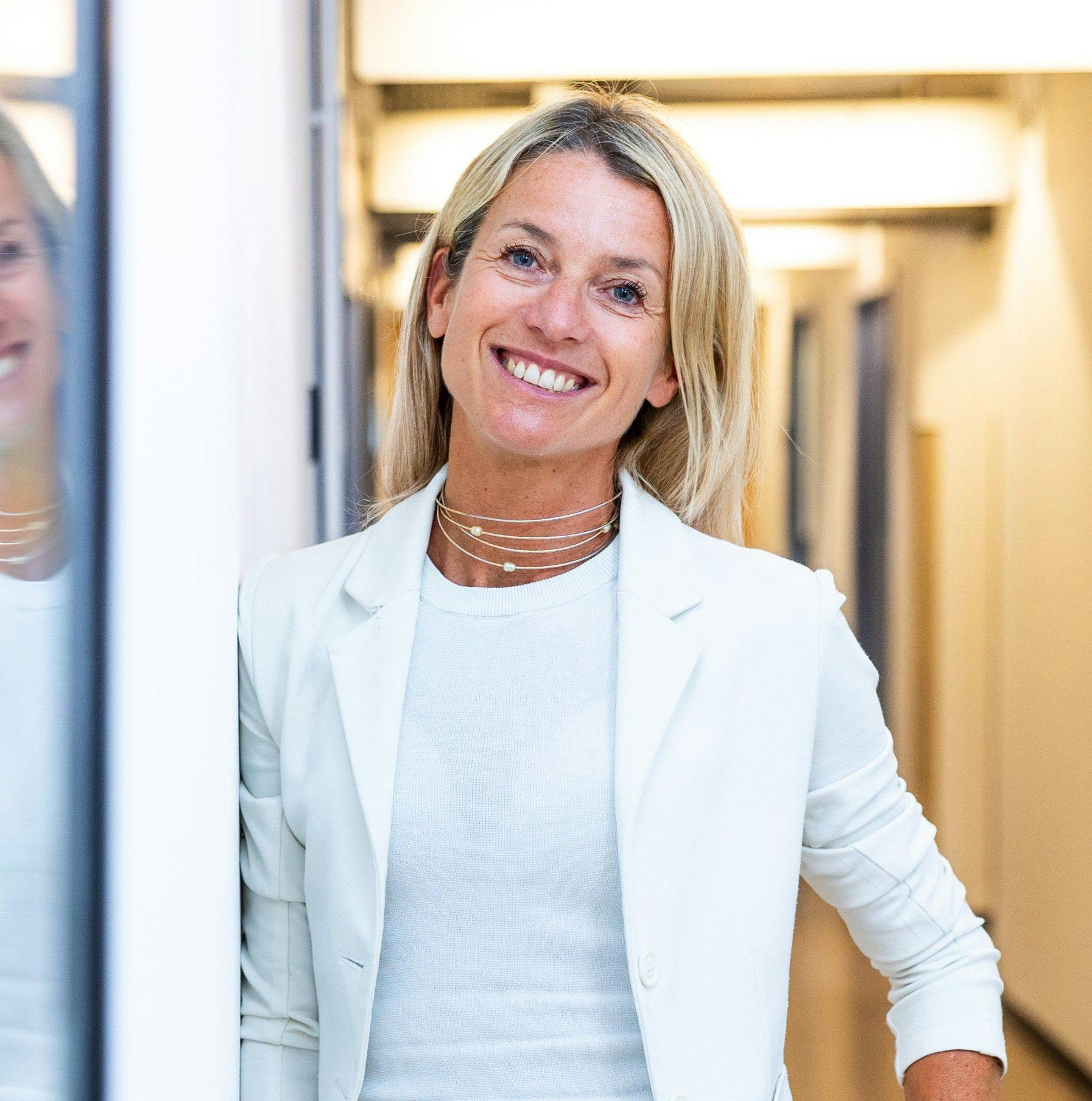
Anabelle Decottignies (PI – spokesperson)
A geneticist interested in the mechanisms of cellular senescence arising during either physiological or pathological situations, including in the context of inherited premature aging diseases.
People directly contributing to the ARC project:
PhD student :1
Master student :1
Technician: 1

Pascal Kienlen-Campard (co-I)
A neuroscientist investigating how aging-related mechanisms drive amyloid and tau pathology, neuroinflammation, and neurodegeneration, with the goal of identifying therapeutic targets for Alzheimer's disease.
People directly contributing to the ARC project:
Post-doc: 1
PhD student: 3
Master student: 2
Technician: 1

Bernard Hanseeuw (co-I)
A cognitive neurologist interested in the early pathophysiological changes and clinical manifestations of neurodegenerative disorders, including Alzheimer’s disease.
People directly contributing to the ARC project:
PhD student: 4

Caroline Huart (co-I)
An ENT specialist in rhinology and olfactory disorders interested in the links between smell loss, aging, and neurodegenerative diseases.
People directly contributing to the ARC project:
PhD student: 1

Patricia Renard (co-I)
A cell biologist interested in mitochondria-associated processes, and the lead of the proteomic platform in UNamur.
People directly contributing to the ARC project:
Post-doc: 1
PhD student: 1
Master student: 1
Technician: 2
Theses defended in the context of the Coordinated Research Project
- Kamar Bouchoucha
Olfactory assessment and nasal brushing to investigate mechanisms of neurodegeneration and aging
12/06/2026
Promoter: Anabelle Decottignies (co-prom: Caroline Huart)
- Nathalie Kyalu Ngoie
Molecular signatures distinguishing tauopathies
22/01/2024
Promoter: Bernard Hanseeuw
- Lise Colmant
Screening for AD pathology: focus on spatial navigation
06/03/2025
Promoter: Bernard Hanseeuw
- Thomas Gérard
[F18]-MK6240 PET in Alzheimer's disease and other tauopathies
25/06/2025
Promoter: Bernard Hanseeuw
- Emilien Boyer
Early Diagnosis of Alzheimer’s disease: the potential of plasmatic biomarkers and extracellular vesicles
02/12/2024
Promoter: Pascal Kienlen-Campard (co-sup: Bernard Hanseeuw)
- Marion Dourte
The Nose as a Neurological Frontline: Unraveling Tauopathy through the Olfactory Gateway
12/11/2025
Promoter: Pascal Kienlen-Campard (co-sup: Patricia Renard)
Activities organised as part of the Coordinated Research Project
Invited seminar-ALZAD (Spécial Interest Group on Alzheimer’s Disease) network (Brussels, Belgium) - Organised by Pascal Kienlen-Campard and Bernard Hanseeuw
30/05/2024 Ioanna Sandvig & Axel Sandvig (NTNU - Norway): Reverse engineering of complex neural networks in the study of physiological behaviours and pathological alterations - White matter hyperintensities rewire the neural connectome and constitute a risk factor for future cognitive decline and dementia.
30/09/2024 Sylvain Lehmann (University of Montpellier, France): Present and Future of Alzheimer's disease biomarkers and how to optimize their use in clinical practice.
22/10/2024 Benoit Jobin (Université du Quebec à Trois-Rivières, Canada): Neuropsychological Correlates of the Central Olfactory System in Individuals at Risk for Alzheimer’s Disease.
16/12/2024 Gillian Coughlan (Harvard Medical School) & Jiri Cerman (Prague University)"Why understanding the sex difference in Alzheimer's Disease is urgent & Amyloid biomarkers for AD diagnosis: experience from Prague Memory.
21/01/2025 Ira Espuny Camacho (ULiège): Unraveling intrinsic species-specific features of human brain maturation and disease
10/03/2025 Eric Guedj (Université d’Aix-Marseille, France) & Donatienne Van Weehaeghe (Ghent University: Imagerie du métabolisme cérébral dans le syndrome de covid long & Value of PET scans in the ATN classification and new anti-amyloid therapies in Alzheimer’s disease.
-10/04/2025 Ségolène Lithfous ((University of Strasbourg, France): Mechanisms involved in pain tolerance in aging
-14/05/2025 Karelle Leroy (ULB): Effect of aging on tau pathology propagation in htau mice model of Alzheimer’s disease.
-20/06/2025 John Woodard (Wayne State University, Detroit, USA)
Visiting researchers
Dr. Benoît Jobin (Université de Trois-Rivières, Canada): August 2025
Prof. John Woodard (Wayne University, Detroit, MI, USA): March-July 2025
Publications in connection with the Coordinated Research Project
Publications
1. Kyalu Ngoie Zola N, Balty C, Pyr Dit Ruys S, Vanparys AAT, Huyghe NDG, Herinckx G., Johanns M, Boyer E, Kielen-Campard P, Rider MH, Vertommen D, Hanseeuw BJ.Specific post-translational modifications of soluble tau protein distinguishes Alzheimer's disease and primary tauopathies. Nat Commun. 2023. PMID: 37349319
2. Colmant L, Boyer E, Gerard T, Sleegers K, Lhommel R, Ivanoiu A, Lefèvre P, Kienlen-Campard P, Hanseeuw B. Definition of a Threshold for the Plasma Aβ42/Aβ40 Ratio Measured by Single-Molecule Array to Predict the Amyloid Status of Individuals without Dementia.Int J Mol Sci. 2024. PMID: 38256246
3. Boyer E, Deltenre L, Dourte M, Colmant L, Paître E, Sleegers K, Suelves N, Hanseeuw B, Kienlen-Campard P. Comparison of plasma soluble and extracellular vesicles-associated biomarkers in Alzheimer’s disease patients and cognitively normal individuals. Alzheimers Res Ther. 2024. PMID: 38943196
4. Gérard T, Colmant L, Malotaux V, Salman Y, Huyghe L, Quenon L, Dricot L, Ivanoiu A, Lhommel R, Hanseeuw B. Tau PET Imaging With [18F]MK-6240: Limited Affinity for Primary Tauopathies and High Specificity for Alzheimer's Disease. Eur J Neurol. 2025. PMID: 39957301
5. Dourte M, Paître E, Bouchoucha M, Boyer E, Tomé SO, Doeraene E, Huart C, Leroy K, Thal DR, Decottignies A, Hanseeuw B, Suelves N, Kienlen-Campard P. The olfactory epithelium: a critical gateway for pathological tau propagation and a target for mitigating tauopathy in the central nervous system. Acta Neuropathol. 2025. PMID: 40536690
6. Palomares D, Vanparys AAT, Jorgji J, Paître E, Kienlen-Campard P, Suelves N. Telomere-driven senescence accelerates tau pathology, neuroinflammation and neurodegeneration in a tauopathy mouse model. Acta Neuropathol Commun. 2025. PMID : 41024124
7. Coquette C*, Bouchoucha K*, Mahieu M*, Verleden SE, Loriot A, Norris K, Baird DM, Derumier A, Hoton D, De Sadeleer L, Vanstapel A, Vanaudenaerde BM, de Ville de Goyet M, Brichard B,Froidure A, Wuyts W, Van Slambrouck J, Ceulemans L, Trigaux W, Huart C, Decottignies A. Telomere dysfunction and proteostasis decline define distinct pathways of cellular senescence in the human respiratory tract. *: equal contribution. Aging Cell. 2026. PMID : 42010904
8. Bouchoucha K, Collin L, Coquette C, Colmant L, Boyer E, Huyghe L, Gerard T, Salman Y, Hox V, Kienlen-Campard P, Hanseeuw B*, Decottignies A*, Huart C*. Olfactory decline tracks central-to-peripheral spread of tau pathology in Alzheimer’s disease. *: corresponding authors. Alzheimers Dement. 2026. PMID: 41978992
9. Dourte M, Bouloki A, Dieu M, Magomadov M, Paître E, Suelves N, Renard P, Kienlen-Campard P. An early olfactory transcriptomic signature of tauopathy : Gbp2p emerges as a candidate biomarker of Tau-driven neuroinflammation. bioRxiv. 2025. https://doi.org/10.1101/2025.07.01.662324
Conferences proceedings
1. Suelves Caballol N, Saleki S, Palomares Pedroviejo D, Ibrahim T, KienlenCampard P (2023). Dysfunctional mitochondria during accelerated senescence and their impact on Alzheimer’s disease neuropathology. Supplement: Basic Science and Pathogenesis – Part 2, 19, e076710.
2. Salman Y, Malotaux V, Colmant L, Gérard T, Huyghe L, Boyer E, Quenon L, Dricot L, Ivanoiu A, Lhommel R, Kienlen‐Campard P, Hanseeuw B (2023). The volume of the accessory‐basal nucleus of the amygdala reduces with tau pathology in AD, but remains normal in non‐AD conditions. Supplement: Developing Topics, 19(), doi :10.1002/alz.082926
Talks in conference (with selection committee)
1. Kienlen-Campard P. 2022. The role of brain senescence and telomere attrition in the neuropathology of Alzheimer’s disease. 14th Meeting of the Belgian Society for Neuroscience, Brussels, Belgium.
2. Kienlen-Campard P. 03/29/2023. Deciphering How Aβ assemblies are produced by cells and act to propagate amyloid pathology. International Conference on Alzheimer’s disease and Parkinson’s disease and related neurological disorders, Gothenburg, Sweden.
3. Kienlen-Campard P. 06/17/2025. Upstream senescence accelerates the progression of AD lesions in mouse models. FENS regional meeting, Oslo, Norway.
4. Hanseeuw B. 10/2021: [F18]-MK6240 positron emission tomography to image tau aggregates in Alzheimer’s disease and other tauopathies. EuroTau meeting. Lille, France.
5. Hanseeuw B. 12/21. Imagerie tau et amyloïde : Retour d’expérience de la Clinique de la Mémoire St-Luc. Symposium organisé à l’occasion de la défense de thèse du Dr. F. Cacciamini. Paris La Salpêtrière.
6. Hanseeuw B. 09/22. Evaluating the value of quantitative amyloid PET imaging to predict functional decline. AMYPAD general assembly. Amsterdam, The Netherlands.
7. Hanseeuw B. 11/22. Apport de l’imagerie moléculaire au diagnostic et au pronostic des malades à corps de Lewy. Association des aidants de la maladie à corps de Lewy (A2MCL). Paris, France.
8. Hanseeuw B. 04/23. Specific post-translational modications of the soluble tau protein distinguish between Alzheimer’s disease, 4R-, and 3R-tauopathies. EuroTau meeting. Lille, France.
9. Hanseeuw B. 09/2024. Neuroimagerie de la maladie d’Alzheimer : nouvelles techniques, nouvelles perspectives. Réunions Francophones sur la maladie d’Alzheimer et syndromes apparentés. Bordeaux, France.
10. Hanseeuw B. 01/2025. VeraBIND Tau test, a novel plasma assay for active tau pathology, identifies individuals with positive F18MK6240 tau-PET signal regardless of amyloid status. Human Amyloid Imaging (HAI) conference. San Juan, Puerto Rico, USA.
11. Hanseeuw B. 07/2025. VeraBIND Tau test, a novel plasma assay for active tau pathology, identifies individuals with positive F18MK6240 tau-PET signal regardless of amyloid status. Alzheimer’s Association International Conference (AAIC). Toronto, Canada.
12. Bouchoucha K, Huart C, Decottignies A. 06/23. Towards the development of new, noninvasive tools for neurodegenerative pathologies. APB meeting, Nannay, France.
13. Bouchoucha K, Huart C, Decottignies A.01/25. Assessing the potential of nasal brushing and olfaction as new non-invasive tools for Alzheimer’s disease diagnosis. EURON PhD day, Köln, Germany.
14. Bouchoucha K, Huart C, Decottignies A.05/25. Assessing the potential of olfactory tools for the diagnosis of Alzheimer’s disease. APB meeting, Nannay, France.
15. Huart C. 04/2023: Olfactory dysfunction and cognitive decline. ACHEMS, Bonita Springs, USA.
16. Huart C. 08/2023: Aging and neurodegeneration. Summer school on human olfaction. TU Dresden. Dresden, Germany.
17. Huart C. 04/2025: Pathologies neurodégénératives, odorat et vieillissement. Journée de l’olfaction. Hôpital Lariboisière. Paris, France.
18. Huart C. 07/2025 : Aging and neurodegeneration. Summer school on human olfaction. TU Dresden. Dresden, Germany.
Contact point in UCLouvain
Pr Anabelle Decottignies, Principal Investigator (spokesperson/coordinator), Université catholique de Louvain (UCLouvain), de Duve Institute (DDUV), E-mail